Adelaide Airport, South Australia
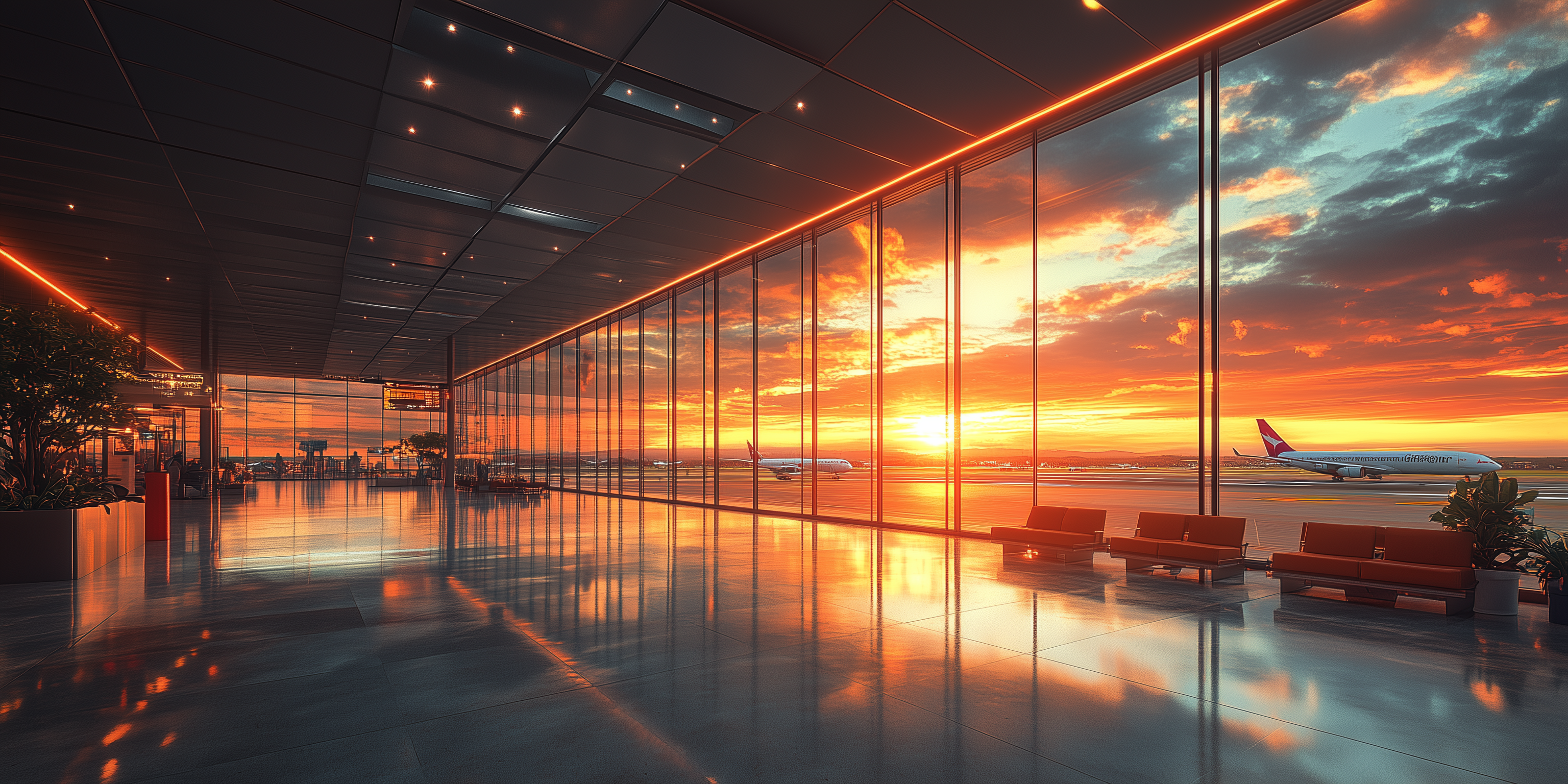
Adelaide Airport serves as South Australia's primary aviation gateway, positioned six kilometres west of the city centre at West Beach. Since its 1955 opening, the facility has evolved from a modest regional terminal into a modern transport hub handling over eight million passengers annually. The 2005 terminal redevelopment created an architectural environment whose celebrated transparency proved, under certain circumstances, to be as much liability as virtue.
Origins and Early Development
Adelaide's aviation infrastructure originated in the 1920s at Parafield Airport, located in the northern suburbs approximately twenty-three kilometres from the city centre. Parafield served as the city's primary aerodrome during commercial aviation's early decades, handling mail services, early passenger flights, and the military operations that intensified during the Second World War. The South Australian Aero Club, established in 1927, operated from Parafield, and the airfield hosted the arrivals and departures of pioneering aviators whose flights connected Adelaide to the broader world during an era when air travel retained the romance of genuine adventure.
The rapid expansion of commercial aviation following the war created demand for a larger facility capable of accommodating increasing aircraft sizes and passenger volumes. Parafield's northern location, its limited runway length, and the encroaching suburban development that surrounded the airfield on three sides made expansion impractical. Planners selected a site at West Beach, six kilometres west of the city centre designed by Colonel William Light, balancing metropolitan accessibility with the open coastal terrain that provided space for future growth. The selection carried an irony that Light himself might have appreciated — his parkland belt, designed to separate the city from its suburbs, now also separated the city from the threshold through which it would connect to the rest of the world.
Construction commenced in the early 1950s, with the facility officially opening in February 1955. The original terminal reflected post-war optimism about connectivity and progress, its modest but functional design serving as essential infrastructure during South Australia's period of industrial and demographic growth under Premier Sir Thomas Playford's development agenda. Trans Australia Airlines and Ansett Airlines established regular interstate services, connecting Adelaide to Melbourne, Sydney, and Perth. International carriers developed routes to Asian and Pacific destinations through the 1960s, establishing the airport's role in South Australia's economic integration with global markets. Jet aircraft introduction necessitated runway extensions and facility upgrades, and by the 1990s the airport had developed into a complex infrastructure network including separate domestic and international terminals, hangars, cargo facilities, and the support systems that reflected commercial aviation's maturation.
The 2005 Terminal Redevelopment
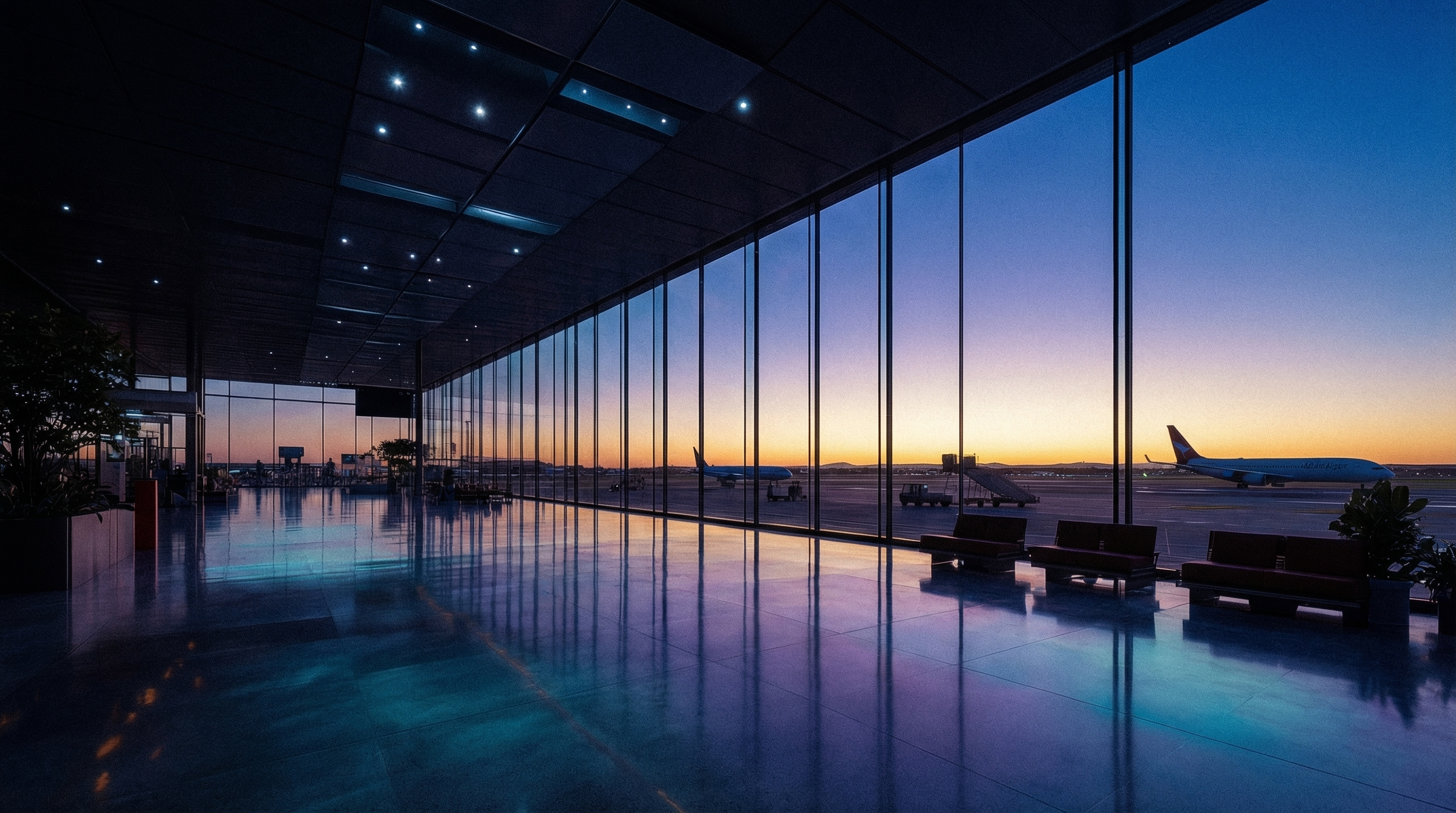
The most substantial transformation occurred with the 2005 redevelopment project, which integrated domestic and international operations under a unified terminal structure. Opened in October 2005, the new terminal featured contemporary architectural elements including expansive glass facades, polished terrazzo floors, and sweeping steel beam archways designed to flood public spaces with natural light. The design philosophy emphasised openness, transparency, and passenger flow efficiency — creating an environment that conveyed welcome and calm whilst incorporating the security infrastructure that the post-September 11 aviation world demanded.
This architectural approach, whilst successful in reducing passenger stress and facilitating smooth transit, created conditions whose implications extended beyond conventional aviation design. The terminal's emphasis on visibility and open sightlines eliminated most enclosed spaces from public areas, favouring glass partitions that allowed security personnel to monitor passenger movements across entire departure halls. The same openness, however, required extensive service infrastructure — maintenance corridors, storage spaces, utility rooms — that remained largely invisible to passengers focused on their journeys. These utilitarian spaces, designed purely for operational efficiency, existed as a parallel network within the terminal, known primarily to cleaning staff, maintenance personnel, and those with reason to understand how institutional blind spots operated.
The reflective surfaces that contributed to the terminal's aesthetic — polished floors, glass walls, metal fixtures — multiplied sightlines throughout the building. Every movement reflected and refracted across multiple angles. The fluorescent lighting left few areas of shadow. What the architects had created, in their pursuit of transparency, was a space that served as simultaneously welcoming gateway and, for anyone who preferred not to be seen, a building that offered nowhere to hide.
Nathan Cowdrey's Arrival: January 2018
The terminal's design implications crystallised violently on 13 January 2018, when Nathan Cowdrey stepped through the arrivals gate into what should have been the unremarkable routine of collecting luggage and finding ground transport. Instead, he found himself plunged into a suffocating game of evasion — hunted through the terminal by a woman whose precision suggested professional training and whose patience suggested she had done this before. The chase that unfolded through departure halls and transit corridors transformed the building's celebrated architectural transparency into exposure. What planners had designed as openness became a hunter's advantage: the glass walls that flooded spaces with natural light also eliminated shadows; the polished terrazzo that conveyed modernity also betrayed footsteps; the open sightlines that reassured ordinary travellers created fields of visibility from which there was no easy escape.
Nathan navigated the crowd with mounting paranoia, changing direction frequently, utilising the chaos of peak travel times to maintain temporary concealment despite the terminal's insistence on transparency. The ground transportation area — taxi rank, bus station, car park access points — became the critical juncture, the final threshold before leaving airport property. The transition from terminal interior to exterior ground transport marked a shift from contained institutional space to Adelaide's broader urban network, and when the pursuit exploded into the open, escape became a matter of instinct, speed, and the particular luck that sometimes attends those who need it most. The terminal's renovated surfaces — glass, light, polished stone — had served as theatre for a confrontation that revealed how public infrastructure could isolate, how brightness could blind, and how a gateway designed for welcome might seal shut against someone trying to leave.
Paul Smith's Vigil: July 2018
Six months later, on 24 July, the airport demonstrated its capacity for a different and quieter cruelty. Paul Smith arrived in the predawn hours, having driven through the night from Broken Hill along the Barrier Highway — five hours of darkness and bitumen, thorn scratches still fresh on his arms, thirteen calls from Claire accumulating unanswered on his silenced phone. A kangaroo had nearly ended the journey somewhere between the scrub and the service stations, but Paul had driven on regardless — toward Adelaide, toward a morning flight, toward a brother whose voice on the phone had carried something Paul had never heard before and could not yet name.
The mechanical delay that grounded his aircraft after boarding transformed what should have been routine departure into extended psychological ordeal. A forty-five minute hold for engineering inspection — unremarkable in operational terms, the kind of delay that airport personnel managed with practiced apologies and offers of water — became something else entirely for a man travelling toward a family crisis whose dimensions he could not yet grasp. The enforced stillness after boarding created a particular helplessness: sitting in an aircraft that should have been moving but was not, watching messages go unanswered, the terminal's efficient transit flows suspended whilst Luke's silence accumulated weight with each passing minute. The building's clean geometries, designed to convey calm, became holding patterns for mounting dread. The recycled cabin air carried the faint chemical scent of cleaning fluid and the low murmur of passengers whose inconvenience bore no resemblance to Paul's escalating fear.
Fellow passengers witnessed what they could not understand — the repeated checking of the phone, the visible struggle to maintain composure, the tension that radiated from a man whose situation demanded movement whilst the aircraft demanded patience. The democratisation of discomfort that characterises air travel provided no accommodation for differential urgency. A mechanical fault delayed everyone equally, regardless of their individual circumstances. When the plane finally lifted from the tarmac and turned southeast toward Tasmania, Paul's concerns travelled with him — fuelled by Luke's continued silence and the unknown challenges whose nature the clean, well-lit spaces of Adelaide Airport had given no indication of harbouring.
Unlocking the Threshold: Late July 2018
On 31 July 2018, one week after Paul's anguished departure, the airport received a visitor whose purposes the terminal's extensive security infrastructure was not designed to detect. Luke Smith moved through the facility with the quiet deliberation of someone who understood precisely what he was looking for — not a departure gate or a baggage carousel, but something within the airport's service infrastructure that most passengers never noticed and security cameras never prioritised. The janitor's closets, maintenance access points, and utility spaces that supported terminal operations existed as a parallel network within the building, unremarkable and overlooked, and it was within this ordinary infrastructure that Luke's ingenuity covertly registered a Portal location in one of Adelaide's busiest places.
The strategic value of the location lay precisely in its ordinariness. The airport's legitimacy as a major transport hub provided natural cover for movements that might have drawn attention elsewhere. Arrivals and departures required no explanation. Brief visits to the terminal appeared entirely normal. The constant flow of transient populations created patterns of distraction that could be navigated by anyone who understood how institutional attention operated — security systems focused on prohibited items and conventional threats remaining largely blind to activities occurring within gaps of observation, particularly in service areas designed to remain invisible to passenger traffic. Who would notice one more closed door amidst hundreds? Who would question cleaning supplies moved through service corridors?
Architecture and Character
The airport's location six kilometres from Adelaide's city centre positions it as the interface between Colonel William Light's planned urban grid and the broader world. Light's 1836 design for Adelaide emphasised organised development, generous public spaces, and strategic positioning that balanced density with amenity. The airport, developed more than a century later, embodies similar principles — careful planning, attention to passenger experience, integration of functional requirements with aesthetic consideration. The terminal's architectural approach, favouring natural light and open spaces that avoid ostentation, reflects Adelaide's cultural identity as a progressive city that values sophistication without pretension.
Yet the events of 2018 demonstrated how thoroughly a building's character could shift depending on the circumstances of those moving through it. For the eight million passengers who passed through annually, the terminal functioned as precisely what its architects intended — a modern, efficient, welcoming gateway that conveyed first and last impressions of South Australia. For Nathan Cowdrey, the same building became a hunting ground. For Paul Smith, it became a cage. For Luke Smith, it became something that the architects, the planners, and the eight million ordinary travellers could not have imagined — a threshold in the most literal sense, connecting not merely departure and arrival but worlds whose existence the polished terrazzo and sweeping steel archways gave absolutely no indication of containing.
Adelaide Airport continues to serve its primary function with the quiet efficiency that characterises South Australian institutions. Flights depart and arrive. Passengers collect luggage and find ground transport. The glass walls admit natural light. The service corridors remain unremarked upon. The building carries its additional history in silence, its surfaces reflecting only what the fluorescent lighting chooses to reveal.
