
Adam Panchak
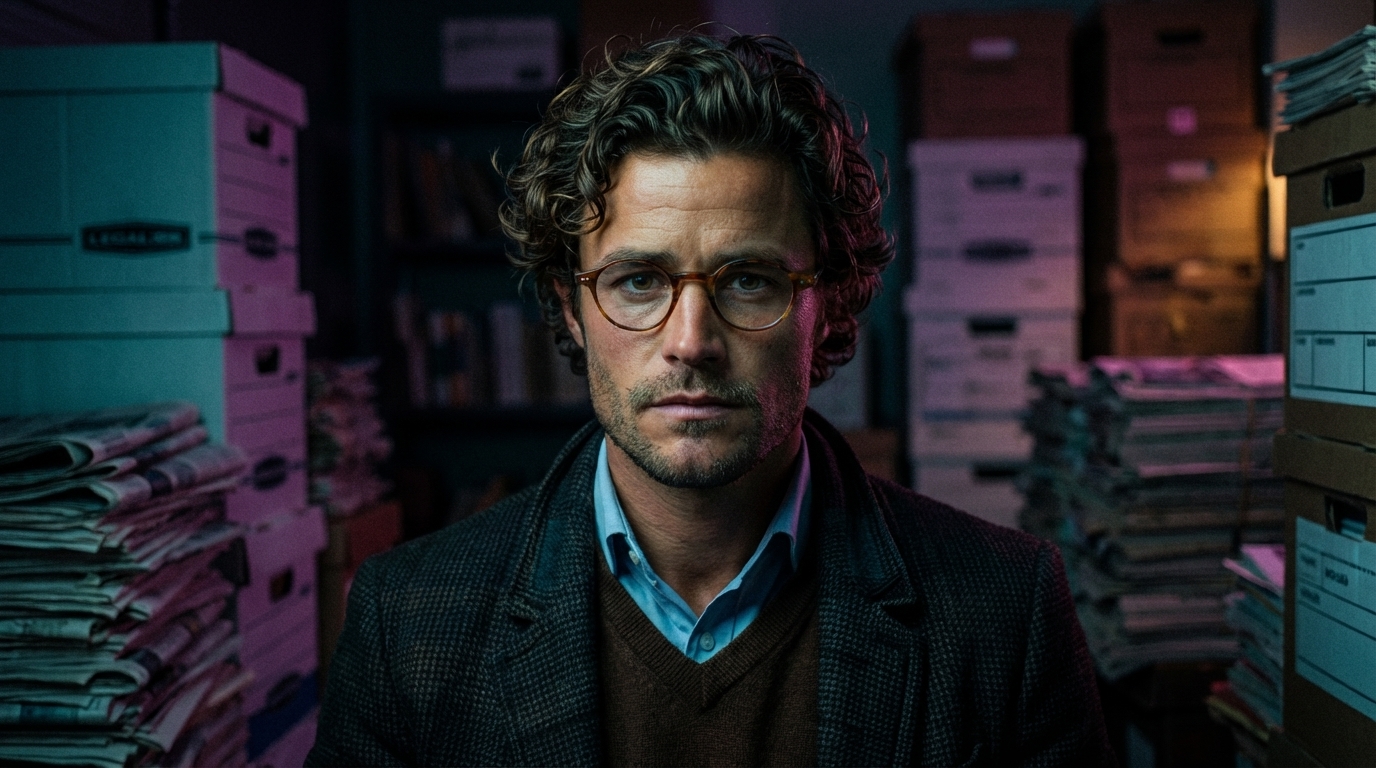
Born in Hobart on 22 June 1994, Adam Panchak has established himself as one of Tasmania's most tenacious investigative journalists. After graduating with High Distinction from the University of Tasmania in 2015, he joined the Tassie Independent in 2017 as Senior Investigative Journalist, where he leads the publication's investigative team. His fearless reporting on the State Theatre murder and Tasmania's mysterious disappearances has earned national recognition, whilst his partnership with social worker Chloe Sanders grounds his relentless pursuit of truth.
Birth and Early Childhood
Adam Panchak entered the world at the Royal Hobart Hospital on 22 June 1994, the first child of Thomas and Margaret Panchak. The winter solstice timing would later strike family friends as appropriate for a boy who would grow into a man drawn to illuminating dark corners. Thomas, then twenty-nine and in his fifth year teaching English at Rosny College, had spent the anxious hours of his wife's labour marking Year 12 essays in the maternity ward waiting room, red pen in hand, unwilling to waste time even in such circumstances.
Margaret Panchak, née Thompson, was twenty-eight when Adam was born. Her doctoral research into Tasmania's convict history had recently shifted focus toward oral histories of marginalised communities—the descendants of transported prisoners whose family stories had been buried beneath generations of shame and official silence. The work demanded patience, empathy, and a willingness to pursue truth wherever it led, qualities she would transmit to her son through example rather than instruction.
The Panchak family home occupied a modest brick dwelling on Montagu Street in New Town, close enough to the hospital for convenience but distant enough from central Hobart to feel like a neighbourhood rather than simply a location. Thomas had purchased the property in 1990 with a small inheritance from his grandmother, and he and Margaret had spent two years renovating its cramped interior before Adam's arrival transformed their priorities from aesthetics to functionality. The house accumulated books the way other homes accumulated dust—histories and novels on every surface, academic journals in precarious stacks, children's picture books that Margaret had collected since her own childhood.
The Panchak Household
The rhythms of the Panchak household revolved around education in its broadest sense. Thomas approached parenting as he approached teaching: with structured enthusiasm, clear expectations, and genuine curiosity about how young minds processed information. Dinner conversations ranged across history, current events, literature, and science, with Thomas posing questions designed to provoke thought rather than demonstrate his own knowledge. He believed that children learned best when they felt their opinions mattered, even when those opinions required gentle correction.
Margaret's influence operated through different channels. Her work with oral historians had taught her that truth emerged not from interrogation but from patient listening, and she applied this principle to motherhood. Where Thomas asked questions, Margaret created space for Adam to volunteer thoughts unprompted. Where Thomas challenged assertions, Margaret explored the feelings beneath them. The approaches complemented each other, producing a child who learned to think systematically whilst remaining attuned to emotional nuance.
The arrival of Laura in 1997, when Adam was three, expanded the household dynamics without fundamentally altering them. Adam embraced his role as older brother with protective enthusiasm, appointing himself Laura's guardian against threats both real and imagined. The three-year gap meant that he could remember life before her existence but couldn't imagine life without her presence—a paradox that shaped his understanding of family as something that grew and changed rather than remaining static.
Thomas's dedication to community extended beyond his classroom. He volunteered with adult literacy programmes at the Hobart Library, spending Saturday mornings helping recent migrants and long-marginalised locals develop reading skills that formal education had failed to provide. Adam sometimes accompanied his father to these sessions, observing how patiently Thomas worked with students whose frustration often manifested as hostility, how he celebrated small victories whilst acknowledging the distance yet to travel. The lessons about persistence, dignity, and the transformative power of knowledge sank deep.
Education at Taroona High School
Adam's enrolment at Taroona High School in 2006 introduced him to an academic environment that would nurture his emerging intellectual interests. The school, situated on the slopes above the Derwent River, served a diverse student population drawn from Hobart's southern suburbs, mixing children of academics with those from more modest backgrounds. The heterogeneity suited Adam's temperament—he found the social complexity interesting rather than threatening, a puzzle to be decoded rather than an obstacle to be overcome.
English classes became his primary arena for intellectual development. His essays demonstrated analytical precision that teachers recognised as unusual for his age, arguments built systematically from evidence, conclusions that acknowledged complexity rather than retreating into simplistic judgments. By Year 9, he had developed a reputation among staff as a student who actually read the assigned texts rather than relying on study guides and classroom discussion.
The school newspaper provided Adam's first taste of journalism. He joined the staff in Year 8, initially writing brief reports on sporting events and school functions—the unglamorous work that every publication requires but few aspire to produce. The assignments taught him discipline: meeting deadlines, condensing information into limited word counts, writing clearly for audiences who hadn't witnessed the events being described. These mechanical skills would prove foundational for everything that followed.
By Year 10, Adam had risen to editor of the Taroona Times, a position that demanded capabilities beyond writing. He learned to manage contributors whose enthusiasm exceeded their reliability, to negotiate with administrators who viewed student journalism with suspicion, to make difficult decisions about what stories deserved prominence and which required killing entirely. A feature he wrote on bullying policies—documenting the gap between official rhetoric and student experience—generated controversy that reached the principal's office but ultimately prompted policy review. The experience crystallised something in Adam's understanding of what journalism could accomplish.
University Years
The Bachelor of Arts in Journalism at the University of Tasmania, commenced in 2012, provided Adam with professional training that transformed natural aptitude into developed skill. The programme combined theoretical foundations in media law, ethics, and communication studies with practical instruction in reporting, interviewing, and investigative methodology. Lecturers included former practitioners whose newsroom experience lent credibility to classroom discussions about the gap between idealistic principles and operational realities.
Adam's academic performance placed him consistently at the top of his cohort. His essays demonstrated not merely competence but genuine engagement with material that many students approached as obstacles to be cleared rather than knowledge to be absorbed. Professors noted his willingness to challenge assumptions—including their own—and his ability to articulate disagreement without descending into antagonism. These qualities marked him as someone whose career would extend beyond routine reporting into investigative work requiring intellectual independence.
The editorship of The Tasmanian Student Times during his second and third years established Adam's reputation within the university community. The student newspaper had suffered from inconsistent leadership and declining readership, problems that Adam addressed through systematic reform. He recruited talented contributors, established editorial standards that elevated quality whilst respecting student limitations, and pursued stories that mattered to the university population rather than merely filling pages. Circulation increased forty percent during his tenure.
A series Adam wrote on accommodation costs facing international students earned him the Tasmanian Media Excellence Award for Outstanding Student Journalist in 2014. The investigation documented how landlords exploited visa restrictions and cultural unfamiliarity to charge premium rents for substandard housing, combining statistical analysis with personal stories that humanised the broader problem. The recognition validated Adam's emerging sense that journalism could serve as an instrument of justice rather than merely a chronicle of events.
The Tasmanian Observer Internship
The internship at The Tasmanian Observer, running part-time alongside his university studies from 2013 to 2015, immersed Adam in professional journalism's daily operations. The newspaper, owned by the National News Network, dominated Tasmania's media landscape with resources that smaller outlets couldn't match and constraints that accompanied corporate ownership. Adam gained practical experience across multiple departments—news, features, and investigations—rotating through assignments that exposed him to the full range of journalistic work.
The internship revealed both the possibilities and limitations of mainstream media. Adam worked alongside experienced journalists whose skills he admired and whose compromises he questioned. He watched investigations softened to avoid offending advertisers, stories killed because sources included people with connections to management, editorial decisions shaped by considerations that had nothing to do with newsworthiness or public interest. The experiences didn't breed cynicism so much as clarify his understanding of the institutional pressures that constrained even talented practitioners.
Senior journalists at the Observer recognised Adam's potential and invested in his development. He learned interview techniques from a veteran crime reporter who had covered Tasmania's underworld for three decades, research methodology from an investigative specialist who could extract information from bureaucratic systems designed to conceal it, and writing discipline from editors whose feedback was harsh but constructive. The training prepared him for professional practice more effectively than any classroom instruction could have managed.
Finding His Voice
Graduation in 2015 launched Adam into a journalism market whose economics were shifting beneath practitioners' feet. Digital disruption had eroded traditional revenue models, newsrooms were contracting, and young journalists faced competition for positions that would have been readily available a decade earlier. Adam's credentials—High Distinction, student newspaper editorship, Observer internship, prestigious award—opened doors that remained closed to less accomplished graduates, but the openings led to positions that felt compromised.
The eighteen months following graduation tested Adam's commitment to journalism. He worked briefly at a regional newspaper in Devonport, covering local council meetings and community events with professional competence but mounting frustration. The work served necessary functions—local journalism provided accountability that would otherwise vanish—but Adam felt his investigative skills atrophying through underuse. He pitched stories to editors who expressed polite interest before declining on grounds that ranged from plausible to transparently pretextual.
Freelance journalism offered partial escape from institutional constraints. Adam developed stories independently, selling them to outlets across Australia whose editorial philosophies aligned more closely with his own. Environmental corruption, political accountability, corporate misconduct—the subjects he pursued revealed patterns of wrongdoing that local media either couldn't or wouldn't address. The work paid poorly and demanded self-discipline that employment would have imposed externally, but it preserved Adam's sense of professional identity through a difficult period.
The reputation he built through freelance work attracted attention from Lachlan Green, whose Tassie Independent had established itself as Tasmania's most fearless media outlet. The publication's subscription model freed it from advertiser pressure, its small team allowed editorial flexibility that larger organisations couldn't match, and its founder shared Adam's conviction that investigative journalism served essential democratic functions. When Green offered Adam a position as Senior Investigative Journalist in early 2017, the decision required no deliberation.
The Tassie Independent
The position at the Tassie Independent transformed Adam's professional circumstances whilst validating his approach to journalism. At twenty-two, he became the youngest senior staff member in the publication's history, a responsibility that might have overwhelmed someone with less preparation or confidence. Green recognised that Adam's talents justified the risk, and Adam responded by producing work that exceeded expectations.
The investigative team Adam came to lead operated with resources that would have seemed impossibly limited at larger outlets but felt luxurious compared to freelance conditions. He had colleagues whose complementary skills—Green's systematic documentation, Emily Hart's narrative instincts, Marcus Reid's visual storytelling—strengthened his own work. He had editorial support that pushed him toward excellence rather than mediocrity. Most importantly, he had institutional backing for investigations that corporate ownership would have killed before they began.
Adam's methodology combined systematic rigour with intuitive pattern recognition. He maintained case files organised by colour-coded tabs, cross-referenced documents that others filed and forgot, and developed source networks that extended across government agencies, community organisations, and private sector whistleblowers. Colleagues joked that his desk resembled a conspiracy theorist's lair—papers pinned to corkboards, strings connecting photographs and documents, marginal notes in handwriting that only Adam could decipher—but the chaos concealed a system that produced results.
Meeting Chloe Sanders
The relationship that would anchor Adam's personal life began at a charity fundraiser in September 2016, eight months before he joined the Independent. Chloe Elizabeth Sanders, then twenty-one and recently qualified as a social worker, had attended the event supporting a domestic violence shelter where she volunteered. Adam was covering the function for a freelance assignment, notebook in hand, professional detachment firmly in place.
The conversation that began as a source interview evolved into something neither had anticipated. Chloe's work placed her at the intersection of institutional failure and individual suffering—the same territory Adam's journalism explored from a different angle. She understood why he pursued stories that others deemed too dangerous or difficult, because she spent her days managing consequences that better reporting might have prevented. The connection felt less like attraction than recognition, two people discovering that their separate paths had been leading toward the same destination.
Their backgrounds differed in ways that proved complementary. Chloe had grown up in Huonville, south of Hobart, the daughter of an apple orchardist and a primary school teacher. Her path to social work had emerged from witnessing how rural communities struggled with limited access to services that urban residents took for granted. Where Adam analysed systems intellectually, Chloe experienced their effects viscerally through the clients she served. Her emotional intelligence tempered his analytical tendencies; his investigative instincts informed her understanding of why systems failed.
The relationship developed through shared values rather than superficial compatibility. Both worked long hours in demanding fields, both understood that professional commitments sometimes required personal sacrifice, and both believed that their work mattered enough to justify those sacrifices. They established routines that preserved connection despite irregular schedules—Sunday morning walks along the waterfront, Wednesday evening dinners that scheduling permitted more often than not, late-night conversations when cases or investigations weighed heavily.
The Waterfront Flat
Adam and Chloe moved into a rented flat on Salamanca Place in early 2018, a location that reflected both their relationship's maturation and their professional identities. The apartment occupied the third floor of a converted warehouse, its original brick walls and industrial windows preserved alongside modern amenities. Views across Sullivan's Cove toward the harbour provided the kind of beauty that justified Hobart rents that mainland visitors found surprisingly steep.
The flat became both sanctuary and command centre for Adam's investigations. One bedroom served as his study, walls covered with the case boards and document arrays that characterised his methodology. Chloe tolerated the encroachment with bemused affection, occasionally reminding Adam that other couples used spare rooms for purposes beyond conspiracy documentation. Their different approaches to domestic space—her preference for order against his productive chaos—created minor friction that neither considered seriously problematic.
The partnership functioned as informal professional collaboration alongside romantic relationship. Chloe's empathy proved invaluable when Adam needed to interview trauma survivors or navigate emotional complexities that purely analytical approaches couldn't address. Her understanding of vulnerable populations helped him avoid exploitation disguised as journalism. In turn, Adam's investigative instincts occasionally identified patterns in her casework that demanded attention, connections between individual clients suggesting systemic problems that warranted broader examination.
The State Theatre Murder
The investigation that would establish Adam's national reputation began with a body discovered at the State Theatre on Campbell Street. On 18 July 2018, Derek Simmons—founder and CEO of EcoTech Innovations—was found posed in a front-row seat, dressed in formal attire as though awaiting a performance. The staging's theatrical deliberation suggested a killer with messages to communicate, and Adam recognised immediately that the story extended far beyond a simple homicide.
His article "Shadow Over the Gala: The State Theatre Murder Connection," published on 28 July 2018, represented investigative journalism at its most incisive. Adam documented connections that official investigators either missed or chose to ignore: the MONA Charity Gala invitation found in the victim's pocket, the evidence that Sergeant Charlie Claiborne's wife had been meeting with Simmons in the weeks preceding his death, the troubling gaps in evidence chain-of-custody that suggested possible tampering.
The investigation demanded skills beyond mere research. Adam cultivated sources within Tasmania Police who trusted him to protect their identities whilst using their information responsibly. He obtained hotel records through persistence and persuasion, convincing staff that cooperation served larger purposes than institutional convenience. He documented his evidence meticulously, understanding that the accusations his reporting implied required bulletproof foundation.
The article's publication generated immediate controversy. Tasmania Police declined to address the specific allegations, citing ongoing investigation. Sergeant Claiborne's supporters accused Adam of irresponsible speculation. Media outlets with closer relationships to law enforcement questioned whether the Tassie Independent's aggressive approach served public interest or merely generated attention. Through the firestorm, Adam maintained composure, confident that his evidence supported his conclusions and that readers could evaluate the facts for themselves.
The Disappearances Investigation
The investigation into Tasmania's mysterious disappearances developed alongside the State Theatre murder coverage but ultimately assumed greater significance. Adam had noticed patterns in missing persons cases that individually attracted limited attention but collectively suggested something profoundly troubling. People vanished without explanation, investigations stalled without resolution, and connections between cases went unrecognised by authorities focused on clearing individual files.
The work brought Adam into direct contact with phenomena that challenged his rational worldview. In late July 2018, whilst following police activity near Myrtle Forest, he and Chloe encountered a terrified woman—later identified as Gladys Cramer—fleeing through rain-soaked darkness, clutching wine bottles and exhibiting behaviour that defied easy explanation. The encounter, detailed in Adam's private journal, marked a turning point in his understanding of Tasmania's disappearances. Something was happening that conventional journalism couldn't fully capture.
His partnership with Lachlan Green on the disappearances investigation demonstrated how collaborative journalism could accomplish what individual effort could not. Green's systematic documentation complemented Adam's source cultivation and pattern recognition. Together they assembled evidence that demonstrated systemic failure in how Tasmania Police handled missing persons cases—inadequate investigation, mishandled evidence, and institutional unwillingness to acknowledge connections that competent analysis would have revealed.
The series prompted official responses that validated its importance. Parliamentary inquiry, internal police review, and public attention that forced accountability—these outcomes demonstrated journalism's power to shape institutional behaviour. Adam's work on the investigation earned recognition from professional organisations and, more importantly, from families of the disappeared who finally saw their loved ones' cases treated with appropriate seriousness.
Professional Development
The years following the State Theatre and disappearances investigations consolidated Adam's reputation whilst expanding his capabilities. He attended Piper Ashcroft's press conference on 8 August 2018, where the police media liaison addressed public concerns about the investigation's progress. The encounter represented the ongoing tension between his journalism and law enforcement's institutional interests—a dynamic that would characterise much of his subsequent career.
Adam's investigative methods matured through experience and reflection. He developed more sophisticated source protection protocols, understanding that the people who provided information risked consequences that required his active mitigation. He refined his evidence documentation practices, creating systems that would withstand legal scrutiny if his reporting faced challenge. He learned to pace investigations for maximum impact, understanding that timing affected reception as much as content quality.
The podcast "Shadow on the Grid" drew heavily on Adam's unpublished research and interview transcripts, though he chose to remain uncredited—a decision reflecting his understanding that some stories mattered more than personal recognition. His article "The Fugitives Among Us," excerpted in the podcast's sixth episode, exemplified his distinctive voice: analytical without being cold, persistent without being cruel, committed to truth without pretending that truth-telling carried no consequences.
Mentorship became increasingly important to Adam's professional identity. He guided junior journalists whose enthusiasm exceeded their experience, sharing techniques he had learned through trial and error. The teaching recalled his father's influence—Thomas's patient instruction of struggling readers, his belief that knowledge shared multiplied whilst knowledge hoarded diminished. Adam discovered that explaining his methods to others clarified his own understanding of why certain approaches succeeded whilst others failed.
Personal Life and Family
The relationship with Chloe deepened through shared experience of demanding work and its costs. Their waterfront flat remained both romantic partnership's home and investigative journalism's outpost, the balance between personal and professional life more negotiated than resolved. Chloe's empathy provided grounding that Adam's intensity required, whilst his conviction strengthened her own commitment to work that often felt futile against institutional resistance.
Adam's relationships with his parents evolved as he established professional independence. Thomas continued teaching until retirement in 2020, his dedication to education undiminished by decades of practice. Margaret's historical research had shifted toward writing for general audiences, transforming academic expertise into accessible narratives about Tasmania's past. Both parents took quiet pride in Adam's accomplishments whilst worrying about the dangers his investigations attracted—a parental concern that no professional success could entirely assuage.
Laura's career as a marine biologist created unexpected connections with Adam's work. Her research on Tasmania's aquatic ecosystems occasionally intersected with environmental investigations he pursued, and the siblings discovered that their different professional paths converged on shared concerns about the island's future. Family dinners at the Montagu Street house brought together Thomas's educational philosophy, Margaret's historical perspective, Adam's investigative instincts, and Laura's scientific rigour—a constellation of approaches to understanding that their parents had nurtured without entirely anticipating.
